
Inconel 601 vs Stainless Steel Flanges: Which Material Performs Better in Extreme Heat Conditions?
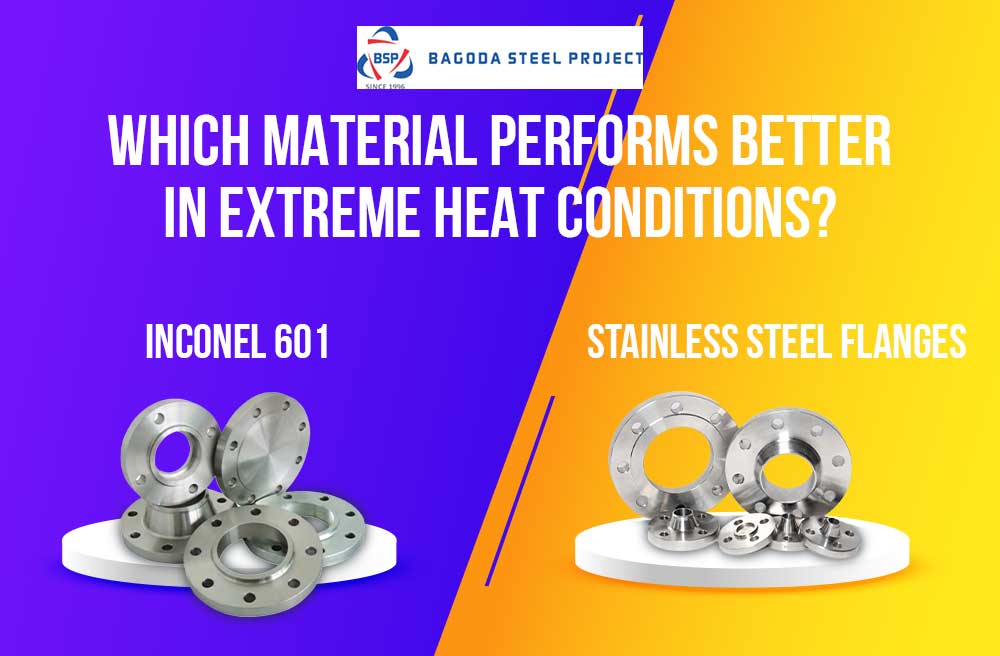
Inconel 601 vs Stainless Steel Flanges: Which Material Performs Better in Extreme Heat Conditions?
In any industry in which equipment is subjected to extreme temperatures, choosing the appropriate material for the flange is essential to ensure safety, efficiency, as well as long-term longevity. From petrochemical facilities and power generation units, to furnaces, chemical processing and even industries, flanges need to stand up to extreme heat, oxidation corrosion, and pressure without failure. Two materials that are commonly used in these types of applications include inconel 601 Flanges vs stainless steel flanges.
Although stainless steel flanges are widely favored due to their low cost and versatility, Inconel 601 flanges, on the other hand, are renowned for their exceptional heat resistance and oxidation defense in high temperature environments. Knowing the high temperature flanges comparison between both these materials will help companies make better choices when it comes to performance-driven applications.
Incredibly, companies that specialize in industrial piping as well as engineering solutions, like a top nylon tube manufacturer frequently deal with industries in which both metal flanges as well as nylon tubing applications are vital to the efficiency of flow control systems. This underscores the importance of selecting the right material, based on the operational conditions.
Hence, we at Bagoda steel project offer you this blog explaining the difference between Inconel 601 vs Stainless Steel Flanges.
Understanding Inconel 601 Flanges
Inconel 601 is an alloy of nickel and chromium specifically designed for resistance to high temperatures. It has a significant amount of nickel as well as aluminum and chromium. This offers excellent resistance to oxidation when exposed for a long time to heat.
Key Features of Inconel 601 Flanges
- Outstanding resistance to oxidation that can reach 2200 degF (1200degC)
- Superior mechanical strength at higher temperatures
- Superior resistance to carburization and thermal fatigue
- Strong resistance to corrosion in harsh environments
- Long service life under extreme temperatures
These characteristics allow Inconel 601 flanges extremely suitable for furnace components and heat treatment equipment thermal processing plants and aerospace applications.
Understanding Stainless Steel Flanges
Flanges made of stainless steel can be among the commonly utilized flange materials in industries. The grades like SS 304, SS 316 along with SS 310 are commonly used according to the temperature and requirements for corrosion.
Stainless steel is a combination of strength, resistance to corrosion as well as affordability and the ability to fabricate. But, the performance can vary dramatically based on the type as well as the operating temperature.
Key Features of Stainless Steel Flanges
- Good resistance to corrosion
- High Tensile Strength
- Simple fabrication and welding
- The cost is affordable for industrial general uses
- Ideal for moderate temperatures
Stainless steel flanges are commonly employed in water treatment facilities and food processing systems, as well as typical industrial pipes networks.
Heat Resistance Comparison
In terms of extreme temperatures Inconel 601 is clearly superior to the majority of grade of stainless steel.
Inconel 601 Performance
Inconel 601 is able to maintain the structural integrity and resistance to oxidation when temperatures exceed 1000 degC. The alloy forms a tight adherent oxide layer, which protects the surface from degrading and scaling.
This is why it is ideal for:
- Industrial furnaces
- Incinerators
- Reactors for Petrochemicals
- Gas turbines
- Systems for processing thermal energy
Stainless Steel Performance
Grades of stainless steel that are standard such as SS 304 and SS 316 are able to withstand moderate temperatures, however they may be weaker and develop scaling after prolonged temperatures.
Specialized grades like SS 310 offer better heat resistance than conventional stainless steel, however they're not quite as durable as Inconel 601 in extremely demanding thermal conditions.
Oxidation and Corrosion Resistance
The resistance to oxidation becomes critical when flanges are exposed to high temperatures and oxygenizing atmospheres.
Inconel 601 Advantage
The high content of aluminum in Inconel 601 produces an oxide layer which prevents rapid oxidation as well as scaling. It is extremely effective under cyclic heating conditions, in which thermal stress is common.
Furthermore, Inconel 601 offers excellent resistance to:
- Sulfidation
- Carburization
- Nitrogen-rich atmospheres
- Chloride attack
Stainless Steel Limitations
While stainless steel offers an excellent resistance to corrosion in many situations, exposure for long periods to temperatures that are high can cause a weakening of the protective oxide layer of chromium. This could result in cracking, scaling and shorter life span in extreme conditions.
Mechanical Strength at Elevated Temperatures
In industries with high temperatures, maintaining the mechanical strength is vital to stopping flange leakage and deformation.
Inconel 601 Strength
Inconel 601 maintains its outstanding tensile strength and creep resistance despite prolonged temperatures. This allows the flanges to remain dimensionally stable when working in thermal high pressure systems.
Stainless Steel Strength
Steel that is stainless loses its strength faster at higher temperatures. Stress and thermal expansion can result in flange distortion and warping under extreme operating conditions.
For companies that require continuous high-temperature operation, Inconel 601 provides a more secure solution.
Cost Comparison
Cost is often a decisive element in the selection of materials.
Stainless Steel: Economical Choice
Flanges made of stainless steel are considerably less expensive than Inconel 601 Flanges. They are perfect for applications where corrosion and temperatures are low.
Inconel 601: Premium Investment
Inconel 601 can be more expensive because of its nickel-rich composition and superior properties that resist heat. The higher initial investment can be justified by:
- Longer service life
- Lower maintenance
- Lower frequency of replacement
- Safety improvements in operations
For mission-critical applications the long-term benefits surpass the cost of materials.
Applications of Inconel 601 and Stainless Steel Flanges
Common Applications of Inconel 601 Flanges
- Plants for heat treatment
- Aerospace exhaust systems
- Power generation units
- Industries of chemical processing
- Industrial furnace equipment
Common Applications of Stainless Steel Flanges
- Pipelines for water
- Food processing systems for food processing
- Pipelines for oil and gas
- Pharmaceutical plants
- General industrial applications
Industries that rely also on nylon tubing systems typically integrate metal flanges with advanced tubing systems to facilitate chemical handling, transfer of fluids and pressure control.
Additionally, a reliable manufacturer of nylon tubes is essential in the supply of durable tubing for industrial equipment operating in a variety of temperature and pressure conditions.
Advantages over Other Materials
In contrast to PVC, tubing or rubber made from steel, Inconel 601 offers several superior advantages:
| Property | Inconel 601 | Stainless Steel |
| Heat Resistance | Excellent (up to 1200°C) | Moderate to High |
| Oxidation Resistance | Excellent | Moderate |
| Mechanical Strength at High Temp | Excellent | Lower at extreme temps |
| Cost | High | Affordable |
| Maintenance | Low | Moderate to High |
Which Material Performs Better in Extreme Heat Conditions?
In extremely hot environments Inconel 601 is definitely the best option. Its ability to withstand the oxidation process, retain its the strength of its mechanical properties, and resist heat fatigue make it extremely suitable for use in critical, high-temperature operations.
However stainless steel flanges continue to be the best choice for moderate temperature applications in which budgetary considerations are crucial.
Choose Inconel 601 Flanges If:
- The operating temperatures are extremely high.
- Resistance to oxygenation is crucial.
- The process of thermal cycling is commonplace.
- Reliability over the long term is essential.
Choose Stainless Steel Flanges If:
- The temperature exposure is moderate.
- Budget constraints are vital.
- General corrosion resistance is enough.
- Standard industrial applications are involved.
The decision to choose between inconel 601 vs stainless steel flanges is based mostly on the operating environment and expectations for performance. While stainless steel is affordable and flexible, Inconel 601 offers unmatched performance even in extreme heat conditions.
Industries working with high-temperature process processes should be aware of aspects like resistance to oxidation, mechanical strength cost, lifecycle cost and thermal stability before selecting the flange material. Therefore, they should conduct a high temperature flanges comparison before they choose between inconel 601 vs stainless steel flanges.
When working with high-end materials or industrial systems offered by a trusted nylon tube manufacturer like Bagoda steel project, selecting the appropriate material will guarantee security, efficiency, and long-term longevity. Modern nylon tubing systems and top flange materials continue to be a part of the evolving industrial infrastructure across a range of industries.
If you are looking to buy Inconel 601 and Stainless Steel Flanges of Premium Quality at an affordable Inconel 601 and Stainless Steel Flanges Price in India then, 'Get in Touch' with Bagoda steel project.
FAQs
1. What is the primary differentiator between Inconel 601 flanges and steel Flanges?
The primary difference is in resistance to heat. Inconel 601 provides an improved resistance to oxidation and keeps its strength even at extreme temperatures. Stainless steel is more suited to moderate temperatures.
2. What is the reason Inconel 601 flanges are used for furnace applications?
Inconel 601 flanges are resistant to scaling, oxidation and thermal fatigue when temperatures are high and are therefore ideal for use in furnaces and other thermal processing conditions.
3. Are stainless steel flanges appropriate for industries with high temperatures?
Certain grades such as SS 310 can handle elevated temperatures, but they might not be as effective in the same way as Inconel 601 in extreme heat conditions.
4. How can nylon tubing applications aid industrial processes?
Applications of nylon tubing are extensively employed for pneumatic, fluid transfer systems, as well as chemical handling because of their durability, flexibility and lightness.
5. Why is selecting a reputable nylon tube manufacturer so important?
A trusted manufacturer of nylon tubes guarantees high-quality tubes that provide constant performance, durability, and security in industrial settings.
