
Inconel 600 Slip-On Flanges Explained: Design Advantages and Industrial Applications
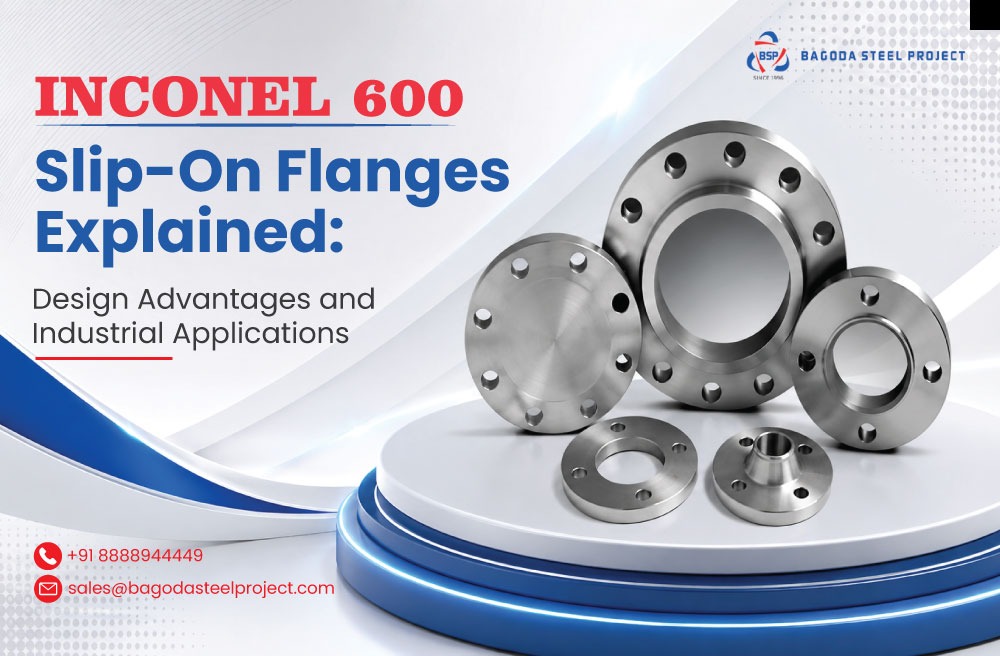
Inconel 600 Slip-On Flanges Explained: Design Advantages and Industrial Applications
In demanding industrial environments, conventional stainless steel and carbon steel flanges may not always provide the corrosion resistance, temperature stability, and mechanical reliability required for long-term operation. This is where nickel-chromium alloys such as Inconel 600 offer significant advantages. Inconel 600 Slip On Flanges are engineered for applications where piping systems are exposed to elevated temperatures, corrosive chemicals, and challenging operating conditions.
For industries handling aggressive media and high-temperature processes, selecting the right flange material can directly influence equipment life, maintenance requirements, and overall system reliability. Bagoda Steel Project supplies quality Inconel flanges designed for demanding industrial piping requirements.
What Are Inconel 600 Slip-On Flanges?
Inconel 600 is a nickel-chromium alloy known for its excellent resistance to oxidation and corrosion across a broad range of operating conditions. It also offers good mechanical properties at elevated temperatures.
A slip-on flange is designed to slide over the outside diameter of a pipe before being welded into position. Unlike weld-neck flanges, the pipe does not need to be machined with a special bevel to accommodate the flange. The flange is generally positioned over the pipe and fillet welded on the inside and outside to create a secure connection.
Inconel 600 Slip On Flanges combine the installation convenience of the slip-on design with the corrosion and heat resistance of Inconel 600. This makes them useful in chemical processing, heat-treatment systems, power generation, petrochemical operations, and other specialized industries.
Key Design Features of Inconel 600 Slip-On Flanges
The design of these flanges provides several practical benefits for industrial piping systems.
-
Easy Installation
Slip-on flanges are relatively straightforward to install because they fit over the pipe before welding. This can simplify alignment and reduce installation complexity compared with certain other flange designs.
-
Excellent Corrosion Resistance
The high nickel and chromium content of Inconel 600 provides strong resistance to many corrosive environments. This is particularly valuable in chemical processing and applications involving corrosive gases, acids, and high-temperature process streams.
-
High-Temperature Performance
Inconel 600 retains useful mechanical properties at elevated temperatures and demonstrates good resistance to oxidation. Consequently, these flanges can be considered for high-temperature piping and equipment connections where ordinary materials may deteriorate more rapidly.
-
Reliable Flanged Connections
When properly selected, installed, and welded, Inconel flanges provide dependable connections between pipes, valves, pumps, vessels, and other equipment. Their bolted configuration also allows connected equipment to be dismantled for inspection or maintenance.
-
Compatibility with Demanding Piping Systems
Inconel 600 is widely recognized for its ability to perform in environments combining heat and corrosion. This makes it a suitable material option for specialized piping systems where material degradation could result in costly downtime.
Advantages of Inconel 600 Slip On Flanges
The major advantage is the combination of material performance and practical flange geometry. Inconel 600 provides excellent resistance to oxidation and corrosion, while the slip-on configuration offers relatively simple fabrication and installation.
These flanges can also help extend maintenance intervals when they are correctly matched to the operating environment. Their resistance to thermal and chemical degradation can contribute to longer service life compared with less corrosion-resistant materials in appropriate applications.
Another benefit is dimensional versatility. Depending on project requirements, Inconel flanges can be manufactured in different nominal sizes, pressure classes, facing configurations, and dimensional standards.
Industrial Applications of Inconel 600 Slip-On Flanges
Chemical Processing
Chemical processing plants frequently operate with corrosive chemicals and elevated temperatures. Inconel 600 flanges can be used for piping connections where resistance to chemical attack is an important consideration.
Petrochemical Industry
Petrochemical facilities require components capable of handling hydrocarbons, process chemicals, heat, and pressure. Inconel 600 can provide a valuable material solution for selected piping and equipment connections.
Heat Treatment Equipment
Furnaces, heat-treatment systems, and associated piping may experience elevated temperatures and oxidation. Inconel 600's high-temperature characteristics make it useful in appropriate heat-treatment applications.
Power Generation
Power plants contain numerous high-temperature piping and process systems. Depending on the specific medium, pressure, and temperature, Inconel flanges may be selected for connections requiring enhanced resistance to heat and corrosion.
Aerospace and Specialized Engineering
Aerospace and other high-performance engineering sectors use nickel alloys where conventional materials may not provide the required combination of strength, corrosion resistance, and temperature performance. Inconel 600 components can therefore find applications in specialized equipment and systems.
Nuclear and Thermal Processing Applications
Inconel 600 has also been used in specialized nuclear and thermal environments because of its resistance to several forms of corrosion and its useful performance at elevated temperatures. Material selection for such applications should always be based on detailed engineering specifications and applicable standards.
How to Select the Right Inconel 600 Slip-On Flange
Selecting the correct flange requires more than simply choosing the alloy grade. Engineers should consider pipe size, pressure rating, operating temperature, fluid composition, flange facing, wall thickness, dimensional standard, gasket type, bolting material, and welding requirements.
Applicable standards such as ASME and relevant project specifications should also be considered. The flange must be compatible with the adjoining pipe and equipment to ensure proper fitment and safe operation.
The manufacturing route and quality documentation are equally important. Buyers should evaluate material certificates, dimensional inspection, testing requirements, heat treatment where applicable, and traceability before purchasing.
Why Choose Bagoda Steel Project?
For industrial buyers, working with an experienced supplier is important when sourcing specialty alloy components. Bagoda Steel Project focuses on supplying piping products and components for demanding industrial applications.
The company can support customers looking for Inconel 600 Slip On Flanges and other Inconel flanges based on project specifications, dimensions, standards, and application requirements. Proper technical consultation can help buyers select a flange that matches the intended pressure, temperature, corrosion environment, and installation requirements.
Inconel 600 Slip On Flanges provide a practical combination of corrosion resistance, oxidation resistance, high-temperature capability, and relatively simple installation. Their performance makes them valuable for selected chemical, petrochemical, power-generation, heat-treatment, and specialized industrial applications.
Choosing the correct flange specification is essential for achieving safe and reliable piping performance. By considering material compatibility, pressure and temperature requirements, dimensions, standards, and quality documentation, industries can obtain a dependable flanged connection. For sourcing high-performance Inconel flanges, Bagoda Steel Project can be considered for applications requiring specialty alloy piping solutions.
SEO FAQs
1. What are Inconel 600 Slip-On Flanges used for?
Inconel 600 Slip-On Flanges are used for connecting pipes and equipment in applications requiring good corrosion and oxidation resistance, particularly in chemical processing, petrochemical, heat-treatment, power-generation, and specialized industrial environments.
2. What are the main advantages of Inconel 600 flanges?
Major advantages include excellent corrosion resistance, good oxidation resistance, useful high-temperature performance, durability, and compatibility with demanding industrial environments.
3. Are Inconel 600 Slip-On Flanges suitable for high-temperature applications?
Yes, Inconel 600 is known for maintaining useful mechanical and corrosion-resistant properties at elevated temperatures. However, the actual suitability of a flange should be confirmed against the application's specific temperature, pressure, medium, and design requirements.
4. How are Inconel 600 Slip-On Flanges installed?
The flange is slipped over the pipe and positioned correctly before being welded. Typically, fillet welds are made on the inside and outside of the flange-to-pipe connection, following the applicable engineering and welding requirements.
5. How can I choose the right Inconel 600 flange supplier?
Choose a supplier that can provide the required alloy grade, dimensions, pressure class, applicable standards, material certification, testing documentation, and traceability. Bagoda Steel Project can assist industrial buyers with Inconel 600 flange requirements based on project specifications.
